Rooftop Tent OEM & ODM: A Private-Label Sourcing Guide
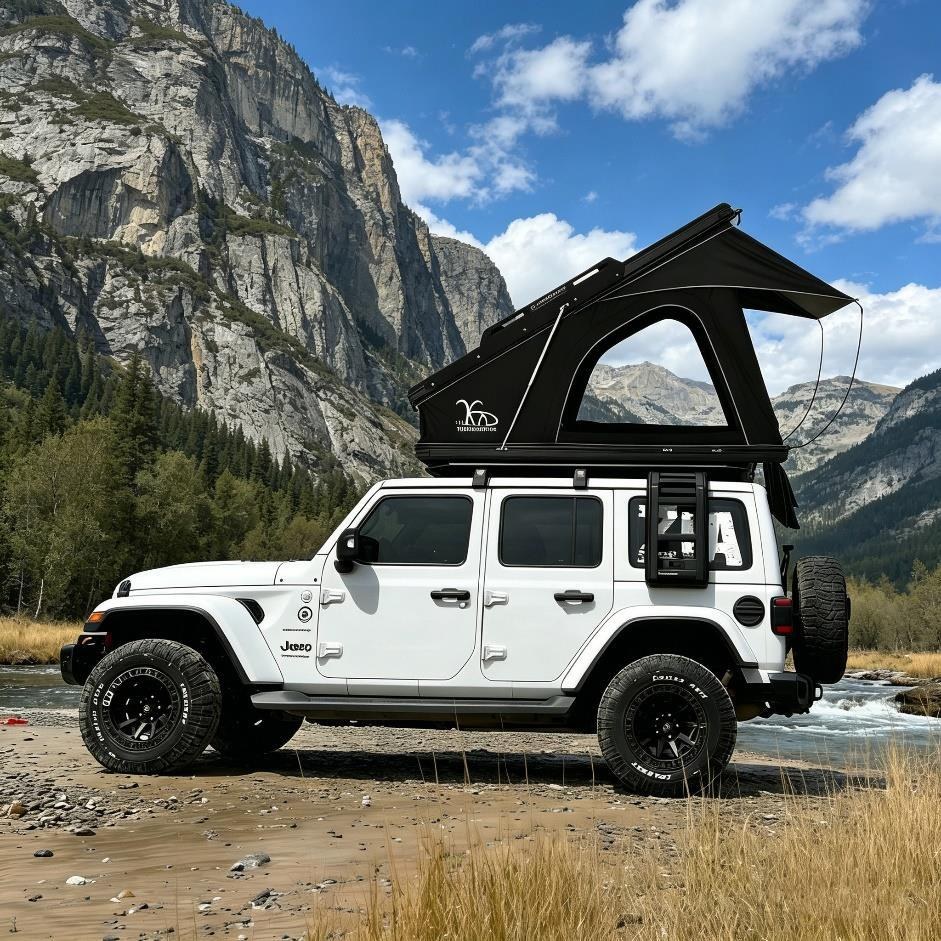
A private-label rooftop tent project begins with a product decision: sell an existing configuration, adapt a catalogue model, or develop a new design. Each route needs a different quotation, approval process and evidence package. Treating them as the same project can lead to a price that excludes essential work or a sample that does not represent the eventual order.
This guide is for outdoor brands, overland retailers and distributors preparing a rooftop tent OEM or ODM enquiry. It explains how to connect the commercial brief with vehicle mounting, construction, sample approval, packaging and repeat orders. AEROVA accepts enquiries for catalogue products and proposed customisation; feasibility, supplier responsibilities and commercial terms are confirmed for each project.
Key takeaways
- Choose a development route before comparing unit prices.
- Use one model reference with explicit size and configuration choices.
- Keep shipping gross weight separate from product net weight and vehicle loading information.
- Approve the product, installation documents and packaging together.
- Confirm customisation, minimum quantities and timing in writing; catalogue imagery is not a production commitment.
Choose between a catalogue model, private label and development
These descriptions are useful starting points, but they do not define a contract. Ask who provides the design, who checks it, who sources components and who approves the final configuration. A branding request can still affect minimum quantities, packaging, instructions and sample work.
| Project route | Typical starting point | Questions to resolve |
|---|---|---|
| Catalogue selection | An existing model and listed size | Current version, included equipment, availability and product-specific terms |
| Private-label request | A chosen model plus brand presentation | Logo position, labels, cartons, instructions, artwork rights and minimum quantities |
| OEM proposal | Buyer-provided drawings or technical requirements | Engineering scope, tooling, validation, ownership and change approval |
| ODM proposal | A supplier-originated design to adapt | Permitted changes, design rights, exclusivity if agreed and sample requirements |
Do not assume a supplier can accept every route on every model. For a first discussion, identify the closest existing reference in the AEROVA collection and describe what should remain unchanged and what you want to modify.
Prepare a brief that connects the market to the product
Commercial inputs
State the destination market, sales channel, intended customer and initial quantity. Explain whether the tent will be sold individually, installed by a dealer or bundled with a rack and awning. An installer-led offer needs different customer instructions and handover arrangements from a boxed product shipped to the end user.
Include the target launch date and the decisions that still depend on the sample. Separate a firm requirement from a preference. A proposed colour, retail carton or mattress change should not quietly become a mandatory commitment before the cost and supply implications are reviewed.
Technical inputs
- Base model, preferred opening layout and required usable space.
- Vehicle and rack applications you intend to support, with relevant manufacturer documentation.
- Closed dimensions, mounting position, ladder access and vehicle clearance constraints.
- Fabric, shell, mattress, windows and hardware requirements.
- Brand presentation, instruction languages and packaging route.
- Documents, inspection criteria and any market-specific evidence you need.
A catalogue image is useful for communicating appearance. It cannot establish the complete mounting design, load limit or packing list. Where the brief depends on a dimension, ask for a current drawing that identifies the exact model and revision.
Compare opening designs before choosing a shell
The collection includes X-hinged, triangular gas-strut, straight pop-up and fold-out references. Compare how each design opens around the vehicle rather than judging only the photograph of the tent at full height. Look at entrance position, ladder approach, hatch access, the space occupied by the open canopy and the clearance needed to close the unit.
For example, RT0703-2A provides an X-hinge starting point, while RT0601 is presented as a straight pop-up reference. The RT0501 ABS fold-out model requires a different discussion about its unfolded footprint. These are selection references, not a statement that any of them fits every vehicle.
Resolve weights, mounting and compatibility explicitly
Catalogue gross weight is a shipping figure. It must not be substituted for the installed product weight or used to approve a vehicle setup. Obtain the net weight of the exact tent, the hardware and accessories that will remain on the roof, and the relevant vehicle and rack instructions.
Ask the responsible installer or manufacturer to resolve the complete setup against those instructions, including the proposed driving conditions. Do not publish a universal capacity based on a photograph, a different model or a shipping label. The vehicle-fit checklist lists the information to collect before a model-specific review.
If cross bars or an awning are added to a tent, document the interface and permitted configuration separately. An accessory shown next to a product does not prove compatibility. Confirm the attachment points, supplied fasteners, installation instructions and any restrictions before treating it as part of a retail bundle.
Turn material descriptions into an approval record
Terms such as aluminium shell, ripstop fabric and foam mattress describe categories, not a complete production specification. Record which components use which materials, the agreed fabric reference, colour sample, mattress dimensions, hardware finish and replacement-part identifiers.
If a supplier quotes a coating or performance figure, request the supporting method and evidence appropriate to the proposed claim. A number printed in a catalogue should be attributed as a supplier specification until the supporting documents have been reviewed. A material result should not be represented as proof for every seam, zip, opening or assembled product.
For the buyer-facing page, distinguish what is included from what is optional. Roof bars, lighting, ladders, annex rooms and mounting kits should each have an explicit position in the agreed packing list.
Approve a sample and its documents together
- Agree the base model and the proposed changes.
- Request a dated specification and drawing revision.
- Confirm the sample scope, charges and delivery arrangement.
- Review the received configuration against the written brief.
- Record changes and unresolved points with photographs or measurements.
- Approve a defined revision before releasing the production order.
Sample approval should include the installation manual, warnings, accessory list, labels and packing arrangement. If the sample uses a temporary component, identify it and specify how the production replacement will be approved. A verbal statement that the final product will be improved is not a measurable acceptance criterion.
Keep a record of who approved each change and when it takes effect. A revised bracket, fabric, gas strut or packaging insert can matter on repeat orders even if the marketing model name stays the same.
Discuss minimum quantities, development costs and timing
There is no confirmed universal MOQ or production schedule for the AEROVA range. Request figures for the selected model, size, colour and customisation scope. The relevant minimum may depend on a component or printed package as well as on assembly quantity.
Ask the quotation to identify sample costs, any tooling or artwork setup, unit price, packaging and freight separately. Confirm which charges recur on a repeat order. If a supplier offers a lower price for a simplified version, compare the specification line by line before accepting it as an equivalent product.
Separate drawing review, sample preparation, sample transport, approval, production preparation and final shipping. Record the condition that starts each quoted period. A sailing estimate should not be presented to customers as the total time from their first enquiry to delivery.
Plan packaging and after-sales before the first shipment
Large rooftop products need a quotation that identifies package dimensions, gross weight, number of packages and destination handling. A shipment to a dealer with unloading equipment differs from delivery to a residential address. Use the shipping guide to define the destination and the charges included in the quote.
Agree what happens when packaging arrives damaged, which records the receiver should keep and who handles a missing component. Establish the available spare parts, part references and model-specific warranty terms before promising a service level to your customers. Do not assume one warranty applies to the tent, lighting, fabric and third-party rack.
Build a repeatable catalogue rather than duplicate listings
Use one primary product page for each model, with size and colour options kept within that page until a technically distinct product justifies a separate listing. Give each order a configuration reference that can distinguish two sizes of the same tent. This makes quotations, stock records and customer support easier to reconcile.
For a repeat order, send the earlier approved specification and ask the supplier to identify changes. Review the updated packing list and documentation as well as the price. The dealer sourcing checklist provides a practical review sequence.
Frequently asked questions
Can I request branding on an existing rooftop tent?
Yes, you can submit a branding enquiry. Include the model, proposed logo locations, artwork requirements, quantity and packaging needs. Feasibility, charges and minimums must be confirmed before branding is promised.
Does a catalogue model number identify every detail?
No. A model may have multiple sizes, colours or revised components. Use the model together with a dated configuration and packing list.
Can I use the catalogue weight to approve my roof rack?
No. The catalogue generally lists gross shipping weight. Request product net weight and model-specific mounting information, then review the complete setup against the vehicle and rack instructions.
Are MOQ, sample time and warranty fixed across the range?
No common figures have been confirmed. Request them for your exact product and development route.
What should I send for a useful first quotation?
Send the model, selected size, intended changes, quantity, destination country and postcode, vehicle/rack applications and target timing. State which documents or samples you need before deciding.
Start with a defined product enquiry
Choose a catalogue reference or explain the setup you want to develop. AEROVA can receive your brief for product, configuration and freight review. Use the dealer enquiry page for trade context or send your project details to start a model-specific discussion.
Ready to compare your options?
Send the model, quantity and delivery destination for product and freight information.
Request a quote →